1 / 3
Cartier Color-Change Ceylon Alexandrite Ring, 6.29 Carats
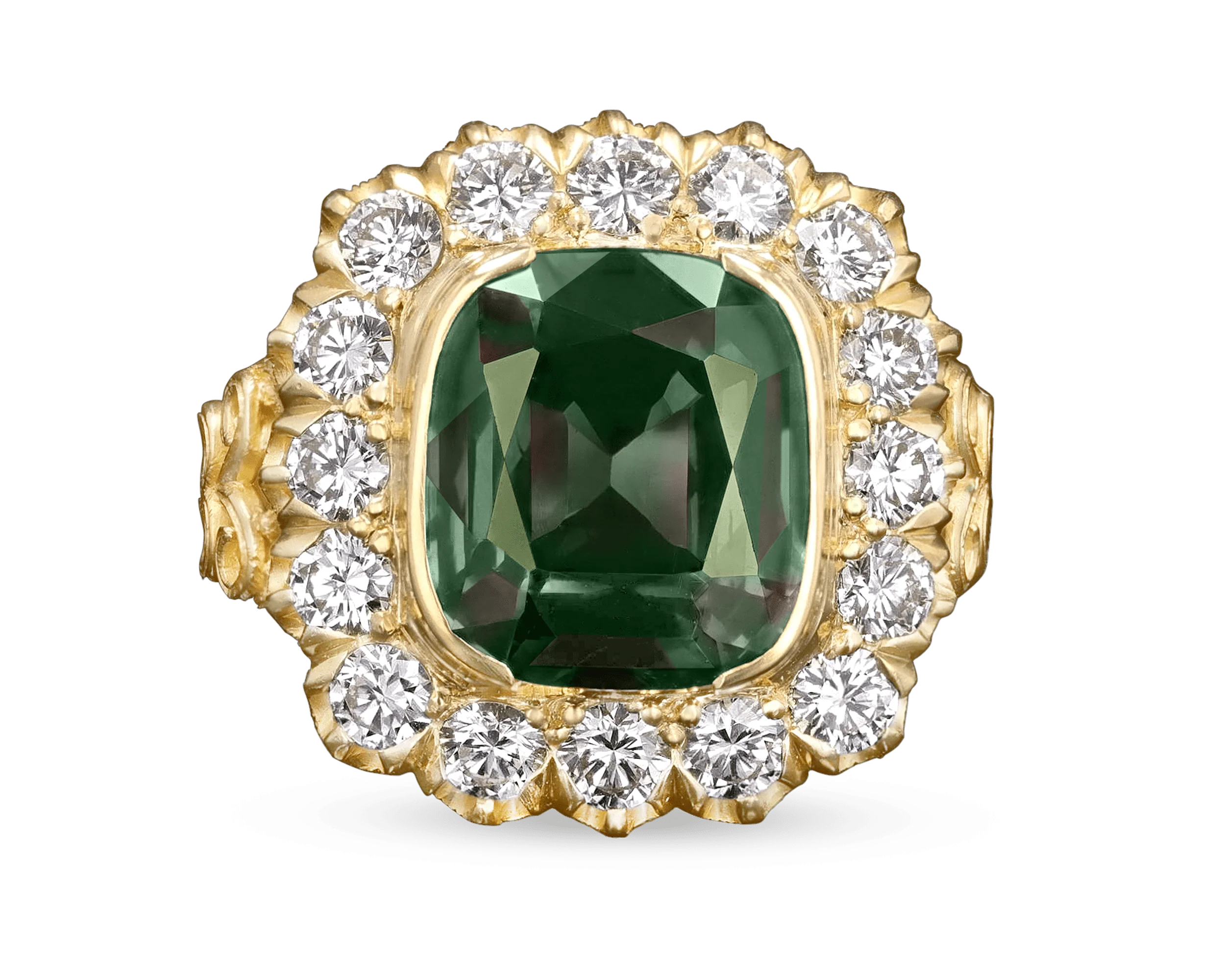
This remarkable 6.29-carat untreated Ceylon alexandrite exemplifies the coveted color-change phenomenon in an exceptional setting by Cartier. The cushion cut gem displays a vivid green in natural light, shifting to a rich brownish pink under incandescent light. Graded by the AGL as completely natural and untreated, the phenomenal stone showcases its extraordinary properties without enhancement. The degree of color change is rated prominent to strong, with an impressive 80–90% shift, and a color-change quality graded excellent to very good. The alexandrite is accented by 1.75 carats of diamonds and set in 18K yellow gold by the renowned jeweler Carter.
Though alexandrite was first discovered in Russia’s Ural Mountains in the 1800s, many of the finest examples have since been sourced from Sri Lanka. This Ceylon alexandrite is particularly rare and highly prized by collectors and designers alike for its exceptional clarity, intensity of color and unique optical properties.
Download the Report
Though alexandrite was first discovered in Russia’s Ural Mountains in the 1800s, many of the finest examples have since been sourced from Sri Lanka. This Ceylon alexandrite is particularly rare and highly prized by collectors and designers alike for its exceptional clarity, intensity of color and unique optical properties.
Download the Report
This remarkable 6.29-carat untreated Ceylon alexandrite exemplifies the coveted color-change phenomenon in an exceptional setting by Cartier. The cushion cut gem displays a vivid green in natural light, shifting to a rich brownish pink under incandescent light. Graded by the AGL as completely natural and untreated, the phenomenal stone showcases its extraordinary properties without enhancement. The degree of color change is rated prominent to strong, with an impressive 80–90% shift, and a color-change quality graded excellent to very good. The alexandrite is accented by 1.75 carats of diamonds and set in 18K yellow gold by the renowned jeweler Carter.
Though alexandrite was first discovered in Russia’s Ural Mountains in the 1800s, many of the finest examples have since been sourced from Sri Lanka. This Ceylon alexandrite is particularly rare and highly prized by collectors and designers alike for its exceptional clarity, intensity of color and unique optical properties.
Download the Report
Though alexandrite was first discovered in Russia’s Ural Mountains in the 1800s, many of the finest examples have since been sourced from Sri Lanka. This Ceylon alexandrite is particularly rare and highly prized by collectors and designers alike for its exceptional clarity, intensity of color and unique optical properties.
Download the Report
$360,000.00
Cartier Color-Change Ceylon Alexandrite Ring, 6.29 Carats—
$360,000.00
Description
This remarkable 6.29-carat untreated Ceylon alexandrite exemplifies the coveted color-change phenomenon in an exceptional setting by Cartier. The cushion cut gem displays a vivid green in natural light, shifting to a rich brownish pink under incandescent light. Graded by the AGL as completely natural and untreated, the phenomenal stone showcases its extraordinary properties without enhancement. The degree of color change is rated prominent to strong, with an impressive 80–90% shift, and a color-change quality graded excellent to very good. The alexandrite is accented by 1.75 carats of diamonds and set in 18K yellow gold by the renowned jeweler Carter.
Though alexandrite was first discovered in Russia’s Ural Mountains in the 1800s, many of the finest examples have since been sourced from Sri Lanka. This Ceylon alexandrite is particularly rare and highly prized by collectors and designers alike for its exceptional clarity, intensity of color and unique optical properties.
Download the Report
Though alexandrite was first discovered in Russia’s Ural Mountains in the 1800s, many of the finest examples have since been sourced from Sri Lanka. This Ceylon alexandrite is particularly rare and highly prized by collectors and designers alike for its exceptional clarity, intensity of color and unique optical properties.
Download the Report